
For widows carrying grief and life responsibilities at the same time.
A Practical Grief Toolkit For Widows Who Feel Like They’re Falling Apart But Still Have To Function
A gentle, practical Grief Toolkit that helps you survive the days you can barely get through
Without being told to “heal,” move on, or follow stages of grief.
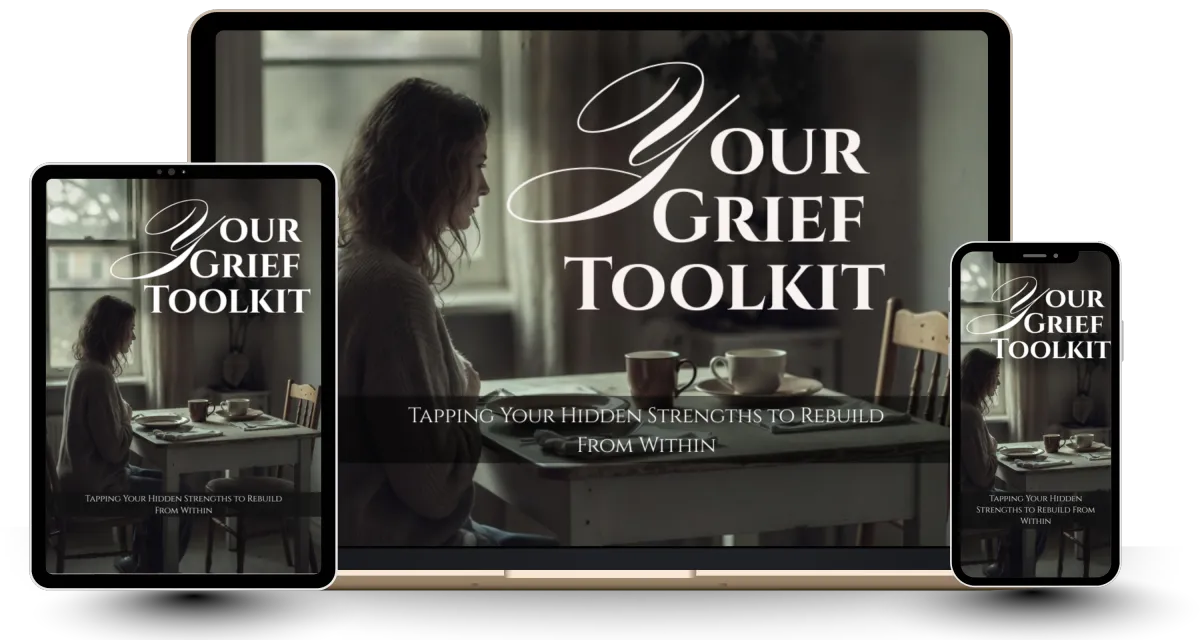
This is not therapy. It’s Your Guidance for the hardest days.
You’re Carrying Grief So Privately That It’s Not Just Heavy— It Is Taking so much From You
It’s late at night.
The house is quiet because the person you loved isn’t there anymore.
You’re holding something that’s gone cold.
“I’m okay,” you tell yourself.
“I just need to get through tonight.”
That’s the lie.
Staying quiet doesn’t mean you’re handling it.
Doing this alone doesn’t make you stronger.
Because the truth shows up everywhere else.
You’re exhausted all the time — and it’s not getting easier.
Your mind feels foggy.
Small decisions feel heavy.
You’re not falling apart… but you’re not really living either.
And then you blame yourself.
🎗For being tired.
🎗For feeling stuck.
🎗For not “doing grief right.”
Here’s the truth most people never hear:
Grief doesn’t just hurt — it consumes mental space.
So much of it that there’s barely any left to think clearly, decide confidently, or trust yourself. You’re not failing.
You’re overwhelmed — because grief is quietly draining the energy you need just to function.

Grief Doesn't Just Hurt — It Drains Your Ability to Function

You did what felt safest.
You gave it time...
You stayed busy...
You pushed yourself to keep going...
That wasn’t weakness. That was effort.
Here’s the truth:.
Grief doesn’t just hurt—it drains your ability to function.
The harder you push to get back to normal, the less capacity you actually have.
So you try harder, and feel worse.
🎗So you feel foggy.
🎗Decisions feel heavy.
🎗You fall behind and blame yourself.
Nothing is wrong with you.
Grief took your capacity— and no one showed you how to get it back.
You’re Not Doing Grief Wrong — You’re Overloaded
When the person you built your life around is gone, life doesn’t pause.
Decisions still come.
Responsibilities still pile up.
And you’re carrying them alone.
So you do the only thing you know how to do: you keep functioning.
Not because it works —
but because stopping feels impossible.
Here’s what’s really happening:
Grief is using all your strength just to keep you upright.
That’s why:
🎗simple decisions feel heavy
🎗small tasks feel overwhelming
🎗you end the day exhausted and unsure why you’re still not okay
This isn’t failure.
This is overload.
You’re not broken. You’re depleted.
And pushing harder won’t fix that.
This toolkit isn’t about “moving on” or forcing progress.
It’s about helping you survive the days you’re already using everything you have to get through.

You Don’t Need to Catch Them. You Just Need to Understand Them.

The world tells you to wait for proof.
To find the messages, the receipts, the smoking gun.
But that’s how cheaters win — they stay one step ahead while you chase evidence that only confirms what your gut already knows.
You don’t need to snoop or beg for honesty.
You need to understand the patterns — the way they distance themselves before they lie, the way they twist guilt into your direction, the way they mask avoidance as “needing space.”
Once you learn to read those micro-behaviors, you stop reacting emotionally and start recognizing reality.
You stop waiting for a confession that will never come, because you already see the truth in their actions.
And that’s where Inside the Mind of a Cheater comes in.
It’s not about catching them. It’s about decoding them, so you can finally stop doubting yourself and start trusting what you see.
⦿ INTRODUCING
The Grief Toolkit:
A Simple System To Help You Think Clearly, Make Decisions, And Get Through The Day — Even When Grief Is Heavy
Grief doesn’t just hurt emotionally. It reduces your capacity — your ability to think, decide, and act.
This toolkit is designed to give that capacity back, one small step at a time.
Not by pushing you forward....Not by forcing healing. But by stabilizing you first.
Here’s what makes this different:
A guided structure for days when thinking feels impossible
Simple prompts and exercises that reduce mental overload
Practical support for moments no one prepares you for
No timelines. No pressure. No “move on” language
This isn’t about fixing grief. It’s about helping you function inside it — without burning yourself out.
Designed specifically for widows who:
Kept going after loss
Did what was required of them
Never fully found their footing again
This gives you something steady to hold onto — on the days when grief is already using all your strength.
Designed for exhausted new moms by a mom who’s been there.
Proven, pediatrician-reviewed methods
No apps. No rigid training. No guilt.
Here’s What You’ll Get Inside:
8 “X-Ray Vision” Modules
Learn to see through charm, excuses, and emotional fog.
You’ll uncover the exact patterns and psychological cycles every cheater follows and how to recognize them before they escalate.
Spot inconsistencies in their stories
Decode emotional distance for what it really is
Stop letting denial cloud what your intuition already knows



The Cheater’s Inner Monologue
Get inside their head. Hear the real thoughts, fears, and rationalizations that happen before, during, and after betrayal.
Understand how guilt and self-justification coexist
Learn what they tell themselves to feel “innocent”
Recognize the emotional patterns they can’t fake

The 7 Justifications Every Cheater Uses
They all have excuses but they come from the same script.
“It just happened.” “We were basically over anyway.” “It didn’t mean anything.”
You’ll learn exactly how to dismantle each one calmly, confidently, and without getting pulled into their story.


The Silent Signs Blueprint
You’ll learn the micro-behaviors that quietly reveal deception - even when their words sound perfect.
Emotional withdrawal patterns
Body language shifts
The “energy drop” that happens before every lie
The Self-Trust Revival Plan
Rebuild the confidence they tried to take from you.
Separate fear from intuition
Reclaim your emotional balance
Make calm, self-honouring decisions based on truth, not fear

Most grief support assumes you have emotional energy to spare.
But widows don’t.
You’re expected to “process,” “heal,” or “move forward” while your mental and emotional capacity is already depleted.
That’s why so much grief advice fails — it asks more from you when you already have less.
The Grief Toolkit was built differently.
It focuses on restoring your capacity first — so you can function, decide, and get through the day without exhausting yourself or forcing healing.
The Grief Toolkit
A 3-part system built to help you get through grief without exhausting yourself or forcing healing.

PART 1 - When Grief Is Using All Your Strength
This part is for the days when everything feels heavier than it should.
When your mind feels slow.
When even small decisions feel draining.
When you’re doing what needs to be done — but it takes everything you have.
This isn’t about being strong or fixing anything.
It’s about getting through today without asking more of yourself than you can give.
This helps with:
Mental fog and constant exhaustion
Decision fatigue over small, everyday choices
Getting through the day without feeling like you’re barely holding on
Over time, you feel steadier — able to breathe, pause, and keep going without pushing yourself.

PART 2 - When Everything Feels Too Much
This part is for when even “easy” days feel draining.
When simple responsibilities wear you out.
When you’re tired all the time, but can’t explain why.
When life feels loud and heavy — even when nothing is technically wrong.
This helps when:
Simple choices leave you stuck
Everyday responsibilities drain you more than they used to
You feel worn down even on quiet days
Slowly, things don’t feel as heavy.
Some days take less out of you — and you’re no longer running on empty all the time.

PART 3 - Finding Your Footing Again
This part is for when you’re tired of waiting to feel “normal.”
When you can get through the day, but still don’t feel settled.
When you worry that feeling better means leaving something behind.
This isn’t about moving on.
It’s about learning how to live inside this changed life — without guilt, pressure, or rushing yourself.
This helps when:
You don’t trust your energy or decisions yet
You feel unsure of where you fit now
You worry that feeling lighter means forgetting
Over time, life feels more steady and manageable —
so you can move through your days without feeling like you’re losing the love you still carry.
This isn’t about healing on a timeline.
It’s about restoring enough capacity to live — one steady step at a time.
What Your Days Feel Like Right Now — And How They Can Start to Feel After
Before

Mentally Exhausted and Scattered
You’re getting through the day — but it costs you everything
Simple decisions (what to eat, who to call, what to do next) feel heavier than they should
You’re exhausted even when nothing “hard” happens
You keep waiting to feel like yourself again — but nothing really shifts
You quietly wonder if this is just how life is now
After

Clear, Energized and Confident
You still miss them — but the day doesn’t drain you in the same way
Decisions feel manageable instead of overwhelming
You have moments where you can breathe without bracing yourself
You trust your energy and judgment more, even on hard days
You’re not “back to normal” — but you feel steadier living inside this life
⦿ FREE COMPANION GUIDES
These Are Included So You’re Not Doing This Alone
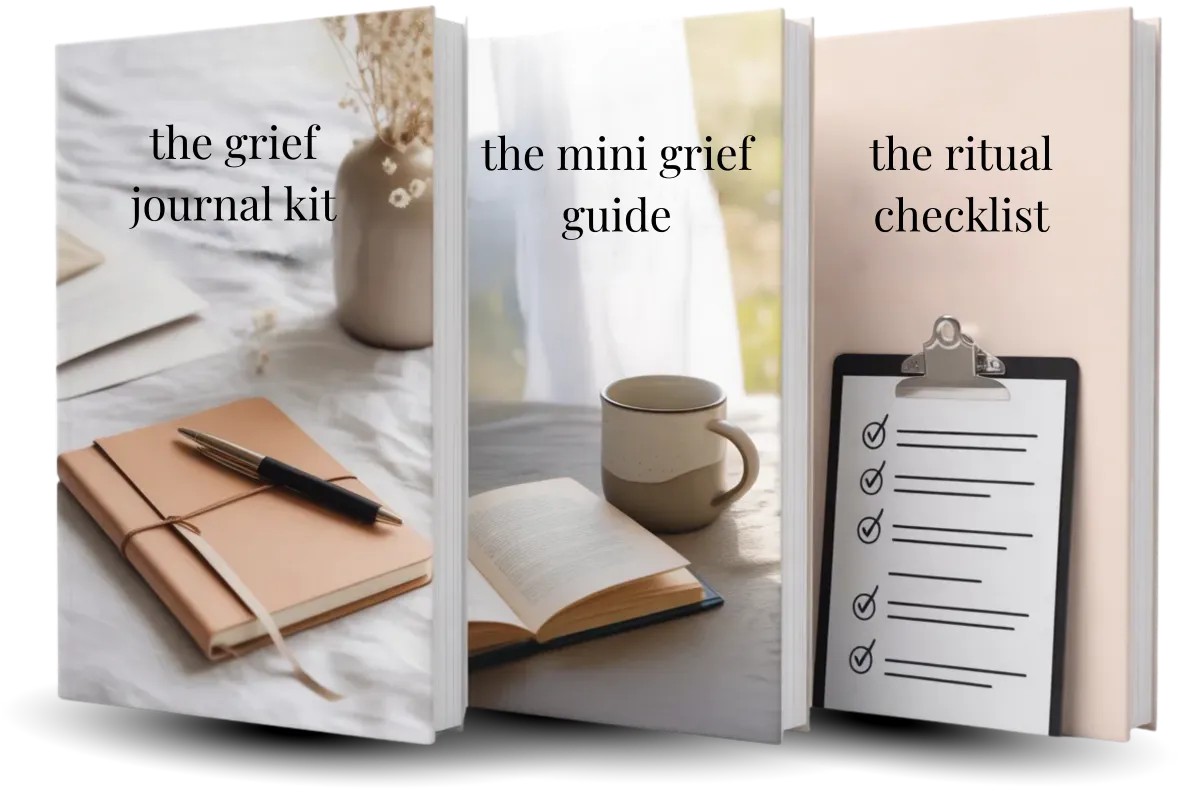
Inside this 8-module system, you’ll uncover:
COMPANION #1: The Grief Journal Kit
A guided journal designed for days when your thoughts feel tangled — so you can unload what you’re carrying without needing the right words.
COMPANION #2: The Mini Grief Guide
A short, grounding guide for the moments when grief hits hardest and you don’t know what to do next.
COMPANION #3: The Ritual Checklist
A simple checklist of gentle daily anchors — so the day has some structure even when your energy doesn’t.
These are included to help you get through the hardest moments — not to give you more work to do.
Designed for exhausted new moms by a mom who’s been there.
Proven, pediatrician-reviewed methods
No apps. No rigid training. No guilt.
⦿ READY TO GET STARTED?
Get Support for the Days You’re Holding Everything Together Alone
A gentle, practical toolkit designed to help you get through the day without forcing yourself to be okay.
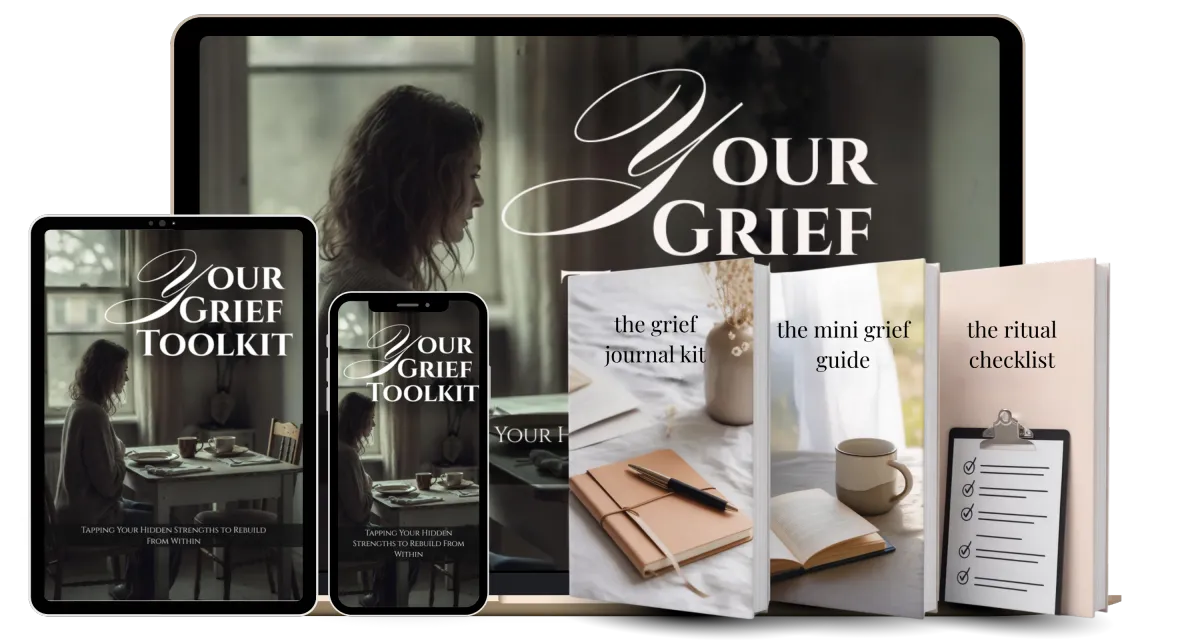
Here’s what you’ll receive:
The Grief Toolkit
A guided workbook to help you get through your days with less strain — without rushing yourself or pretending you’re okay.
Plus these companion guides:
The Grief Journal Kit
The Mini Grief Guide
The Ritual Checklist
⦿ Still Got Questions?
Frequently Asked Questions
Is this meant to help me “heal” or move on?
This isn’t about fixing your grief or pushing you toward an endpoint.
It’s meant to help with very practical things: getting through the day, making decisions when your mind feels foggy, and handling responsibilities without feeling completely drained.
Instead of asking you to process your emotions or reach closure, this helps reduce how much grief takes out of you day to day—so life feels more manageable, even while the grief is still there.
What if I don’t have the energy to journal or reflect?
That’s exactly who this is for.
Nothing here requires deep writing, emotional digging, or long sessions. You can use it in short moments, on days when your energy is low and your mind feels foggy.
Do I need to be in a certain stage of grief for this to help?
No. There’s no “right time.”
This was created for the early days, the long middle, and the moments when grief comes back unexpectedly. You can use what you need, when you need it.
Is this therapy or a replacement for professional help?
No. This isn’t therapy, and it doesn’t try to be.
It’s practical, day-to-day support for living with grief—especially for the parts of life that still have to happen even when you’re struggling.
What if I’m functioning on the outside but feel exhausted inside?
That’s one of the main reasons this exists.
Grief often looks like “coping” from the outside while everything inside feels worn down. This helps reduce that hidden overload, without asking you to stop functioning or explain yourself.
What if I’m afraid that feeling better means forgetting?
You’re not alone in that fear.
Nothing in this work asks you to let go, forget, or leave anything behind. The focus is on making daily life more livable—while honoring the love you still carry.
Terms Of Use | Privacy Policy
All rights reserved LN Publishing LLC
[email protected]